Serving Richmond, CA and surrounding areas. (510) 660-6436
A well-built pressure-treated wood deck can last decades in Richmond. We handle the permit, manage the slope, and give you a written price before a single board is cut.
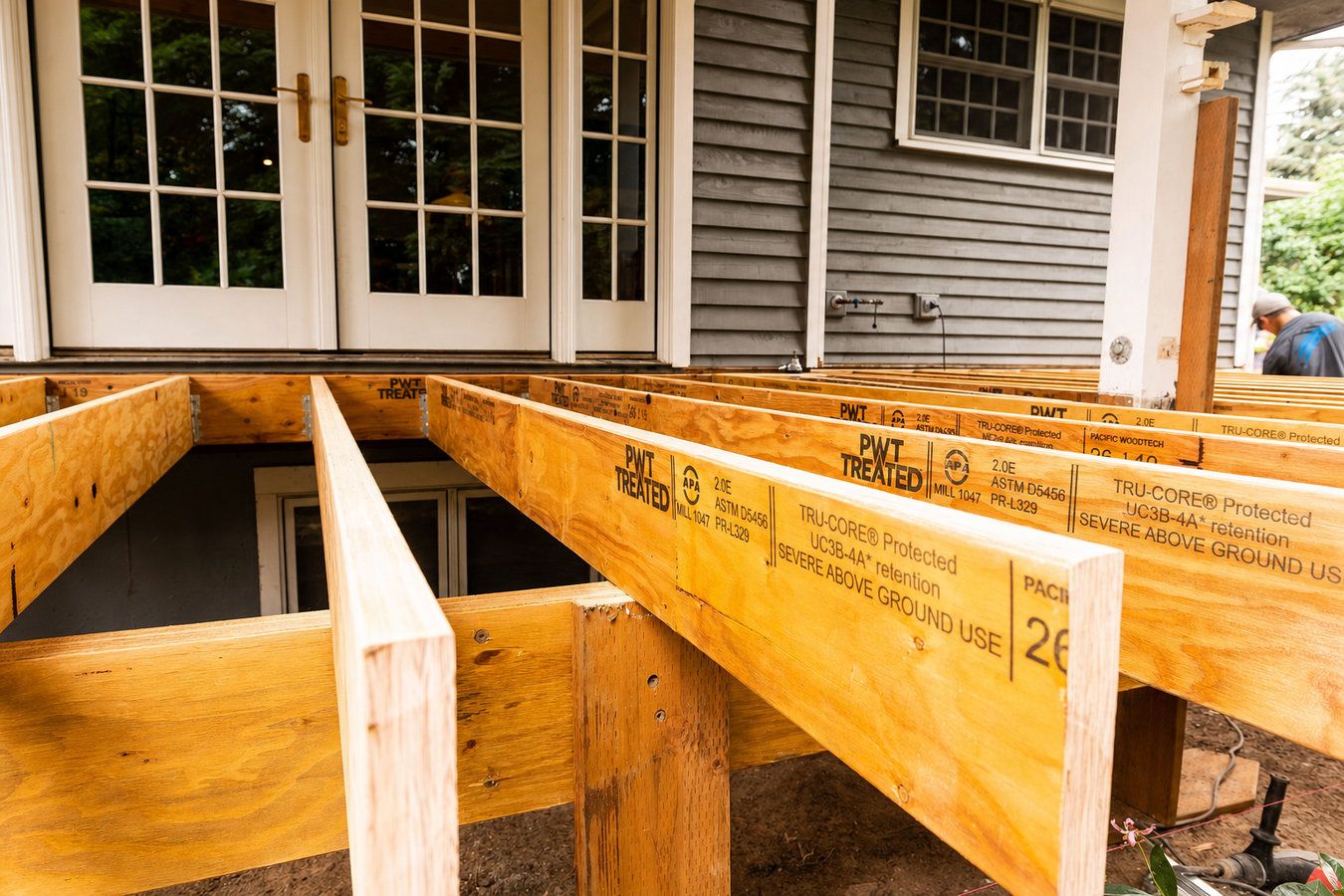
Pressure-treated wood deck construction in Richmond, CA starts with setting posts in concrete footings, building a structural frame, and laying the deck boards on top - all fully permitted through the City of Richmond. Most single-level residential decks take three to seven construction days once materials are on-site, with total timelines of six to ten weeks when permit review is factored in.
Pressure-treated lumber is regular wood soaked under high pressure with a preservative solution that penetrates deep into the fibers - making it resistant to rot, fungal decay, and wood-boring insects. That resistance is what allows a properly maintained pressure-treated deck to last 25 to 40 years in a damp climate like Richmond's. The key word is maintained: in this coastal environment, sealing every two to three years is not optional if you want that lifespan.
If low maintenance is your top priority, our cedar wood deck construction page is worth reading - cedar naturally resists moisture better than pressure-treated pine and has a warmer appearance that many homeowners prefer for visible deck surfaces.
If certain boards flex or give more than they should when you walk across them, rot has started from the inside out. In Richmond's damp coastal climate, untreated or under-sealed wood can deteriorate faster than you expect - especially on shaded decks that stay wet after rain. What feels like a minor soft spot can mean the structural framing underneath is already compromised.
Pressure-treated wood that hasn't been sealed regularly will gray out and develop surface cracks - accelerated by Richmond's foggy, salt-air environment. Cracking is not just cosmetic. It means the wood is losing structural integrity. If your deck looks like weathered driftwood, cleaning and sealing won't restore it - the boards need replacing.
Most pressure-treated decks built before the late 1990s used preservative formulas no longer approved for residential use. If yours is that age and has never been replaced, the wood chemistry, fasteners, and structural connections are all likely past their useful life - even if the surface looks passable from above.
A railing that shifts when you push on it, or a post visibly out of plumb, means structural connections have failed or the post base has rotted. This is a safety hazard - especially with children or older family members using the space. Richmond's salt air speeds up corrosion on metal hardware, so these issues develop faster than in drier inland cities.
We build pressure-treated decks from the ground up - footings, posts, beams, joists, surface boards, railings, and stairs - on a single fully permitted project. Every build starts with an on-site visit where we measure the space, assess the yard grade, and identify any ledger or soil conditions that affect the design and price. We submit the permit application to the City of Richmond on your behalf and coordinate inspection scheduling throughout the project, so you don't have to manage that process yourself.
We also offer deck staining and sealing as a follow-on service once your new pressure-treated wood has dried out - typically six to twelve months after installation. Keeping up with that first seal is the single most important thing you can do to protect your investment in Richmond's climate.
Best for flat or gently sloping yards - straightforward to permit and build, and the most budget-friendly starting point.
Built for Richmond's many hillside and uneven yards - taller posts, more bracing, and stair configurations that work with the grade.
Remove an old failed structure and replace it entirely - the right move when the existing frame is compromised or the layout no longer fits how you use the space.
Richmond's marine microclimate is harder on outdoor wood than most California cities. The persistent salt air, morning fog, and wet winters that roll in off the Bay mean materials and construction details that work fine in a drier inland city may need to be upgraded here. We spec hardware rated for coastal exposure on every build - not as an upsell, but because standard fasteners corrode faster in this environment. The U.S. Forest Service Forest Products Laboratory provides research on wood performance in various climates, and the data consistently supports more conservative material selection in coastal environments.
Much of Richmond's housing was built between the 1920s and 1950s - fast construction during the Kaiser Shipyards era - and many of those older lots have sloped or uneven grades. Homeowners in Pinole and Rodeo often face similar lot conditions. A sloped yard means elevated posts, more bracing, and a more complex stair layout - all of which affect your final price. We assess that during the site visit and give you a number that reflects your actual yard, not a flat-rate guess.
We respond within 1 business day. That first call covers the basics - yard size, whether there is an existing deck to remove, any target date you have in mind. We show up to your property prepared rather than starting from scratch.
We measure the space, assess the slope and soil, and look at the ledger or wall attachment point. You get a written estimate that covers materials, labor, permit fees, and cleanup - not a starting number that grows mid-project.
We submit the permit application to the City of Richmond's Building Services Division on your behalf. Plan review typically takes three to six weeks - we keep you updated. Materials are ordered once the permit is in hand so the build moves without delays.
The crew sets footings and frames first - the noisiest phase, usually one to two days. Surface boards and railings follow. City inspectors check the work at key stages. When we finish, we walk you through the deck and explain the six-to-twelve-month drying window before your first seal application.
We respond within 1 business day. No obligation - just a written estimate based on your actual yard, not a phone guess. After you submit, someone from our office will call to schedule your free on-site visit.
(510) 660-6436We handle the City of Richmond permit application from start to final sign-off. Your deck is fully documented and inspected before we leave. That paperwork matters when you sell your home or file an insurance claim - unpermitted work can require costly tear-out and rebuilding.
A large share of Richmond's residential lots are uneven or sloped - and most contractors underestimate the cost of building on them until they visit the property. We assess grade and soil during every site visit and give you a price that reflects what your lot actually requires.
Richmond sits in a high seismic hazard zone. The connections between your deck's posts, beams, and your home must use specific metal hardware designed to hold under lateral movement. A city inspector will check for it - and we build to that standard on every project. See the{' '} California Geological Survey at conservation.ca.gov for Bay Area seismic hazard information.
A lot of Richmond homeowners have been burned by contractors who gave a low estimate and added costs mid-project. We give you a written proposal covering the full scope - materials, labor, permit fees, and cleanup - before a single board is cut. The number we quote is the number you plan around.
Building in Richmond means knowing the permit office, understanding the coastal climate, and designing for yards that rarely sit perfectly flat. Those details are baked into how we work - not something we figure out as we go.
Cedar resists moisture naturally and needs less frequent sealing than pressure-treated pine - a step up in performance and appearance for exposed deck surfaces.
Learn MoreProtect your new pressure-treated deck with the first seal application once the wood has dried - critical for long-term performance in Richmond's coastal climate.
Learn MorePermit slots fill up fast in spring - reaching out now is the best way to have your deck ready before summer.